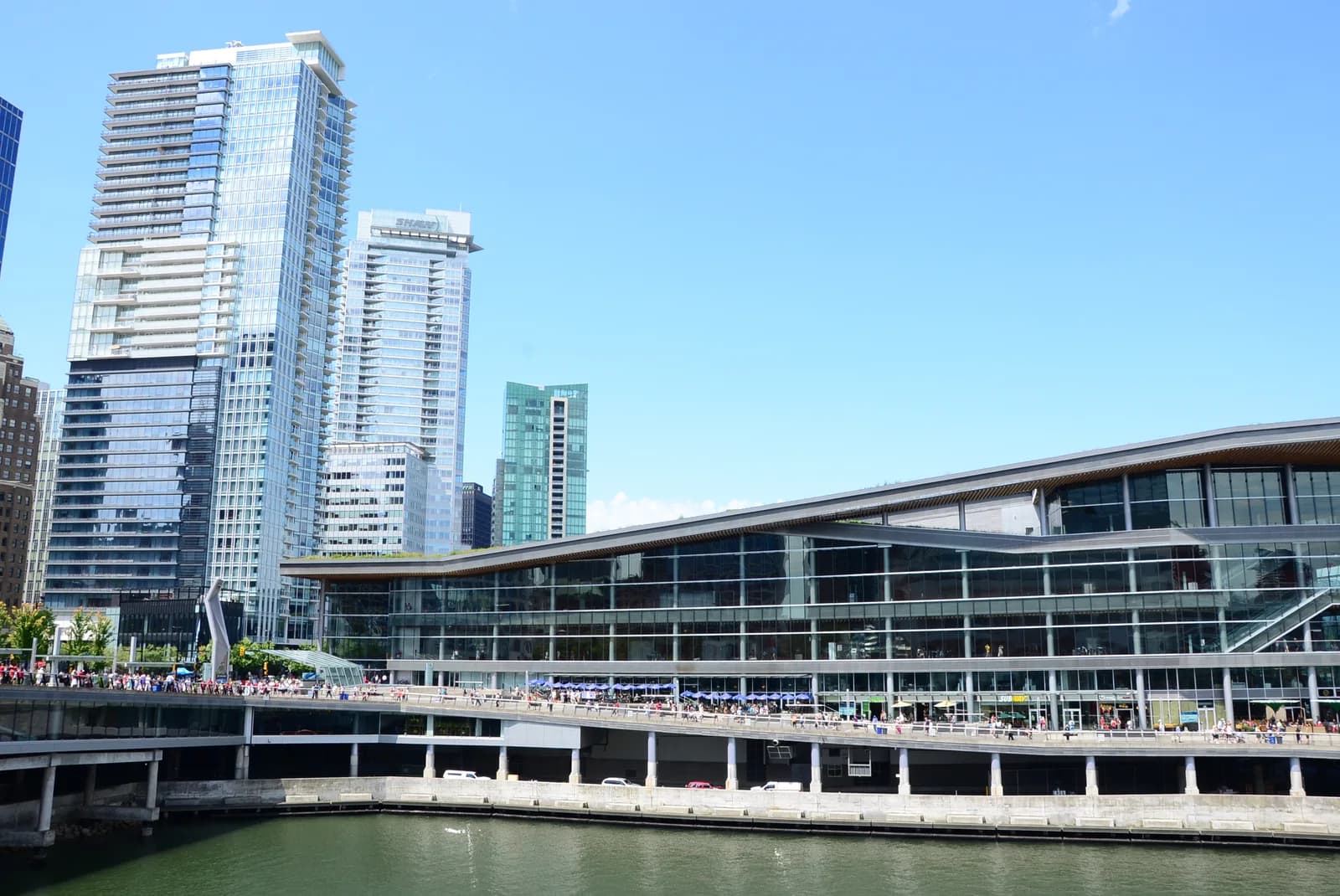
Every tourist who visits Vancouver ends up at "Canada Place," home to the cruise terminal, the "Canada Trail" (with spectacular views of the city), "Fly Over Canada" (a simulator ride where you "fly" over Canada, starting on the East Coast and ending in Vancouver), and both convention centres (Vancouver Convention Centre West and Vancouver Convention Centre East).
Besides these attractions, there's also a hotel, a restaurant, and cafes.
I've traveled to more than thirty countries (often on cruises), and I can tell you Vancouver has the best cruise terminal in the world!
If you're planning an Alaska cruise, don't hesitate to choose Vancouver as your departure and/or arrival port! I say "and/or" because you could sail to Alaska and then fly out from any city, or fly directly to Alaska and sail back to Vancouver by ship. Either way, you gain more time in Alaska since you won't have to sail the "Inside Passage" twice.
The Vancouver Convention Centre hosts conferences from around the world, year-round. More than 500 events are held annually, including the International Wine Festival, the Vancouver International Auto Show, the Animation and Gaming Festival, Anime Revolution, Study and Go Abroad, the Home & Design Show, and countless medical conferences. The famous TED conference is also held here.
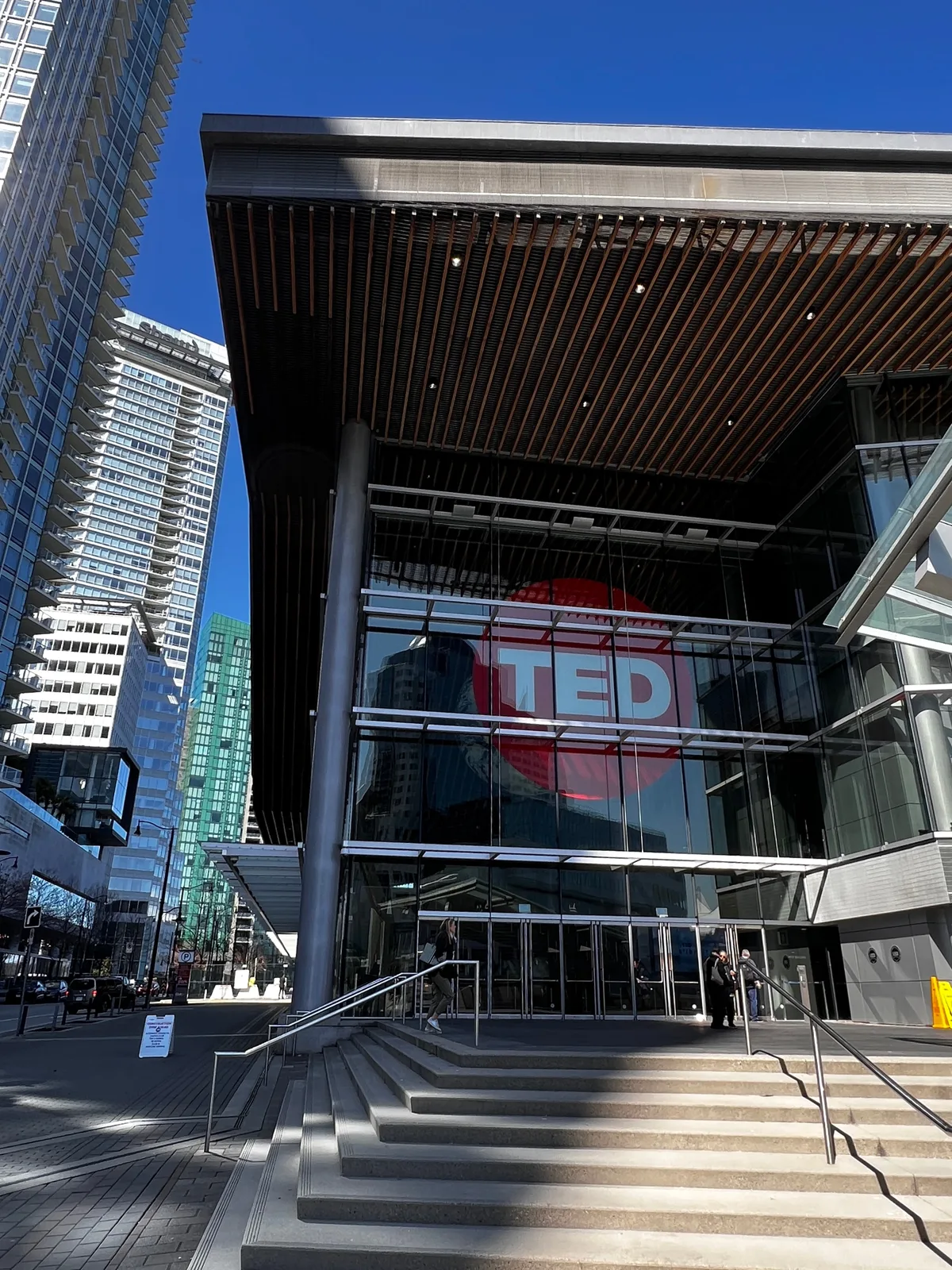
About the Convention Centre
It was built to serve as the Canada Pavilion during the 1986 World's Fair Expo — today it's known as the "East Building."
Since then, the Convention Centre has more than tripled in size with the construction of the new West Building. Completed in 2009, it has since been named "Best Convention Centre in the World" more than once by the AIPC (Association of Congress Centres).
The two buildings are connected by an underground walkway where visitors can admire Indigenous art pieces, as well as the Olympic podium and medals — a memento from the 2010 Winter Olympics held in Vancouver.
Size: The centre spans 43,000 square meters and can comfortably host up to 16,000 people at once.
Interesting Facts
The most fascinating thing about the Vancouver Convention Centre is its sustainable architecture.
The building features floor-to-ceiling glass panels and abundant natural light. A computer system analyzes how much natural light is entering the building and adjusts the artificial lighting accordingly, to optimize energy consumption.
The Olympic Cauldron was used during the 2010 Winter Games and is lit twice a year, on Canada Day (July 1st) and Remembrance Day (November 11th). Notice it has 5 torches, representing the five Olympic rings. It isn't lit more often because the cost of keeping the flame burning is very high: $35,000 a day!
The name of the plaza where the Cauldron sits is Jack Poole Plaza, named after Jack Poole, who served as head of the Canadian Olympic bid committee. Poole was responsible for bringing the Olympics to Vancouver. He traveled to Greece for the torch-lighting ceremony for the 2010 Winter Games and passed away from a terminal illness during his flight back to Vancouver.
In summer, Jack Poole Plaza is used for public yoga classes, exhibitions, and more.
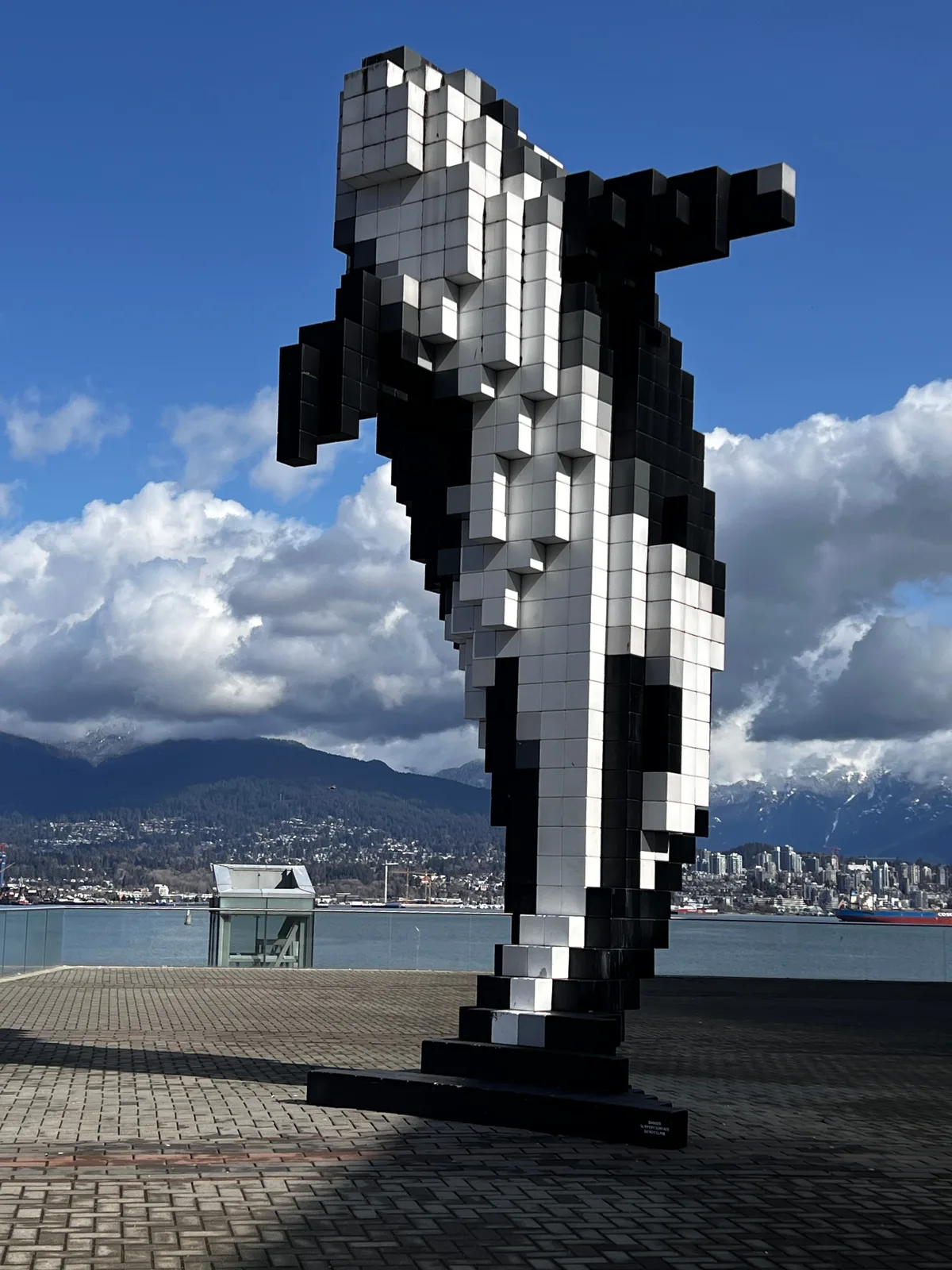
The "digital orca" is a sculpture by Douglas Coupland, and a must-see photo spot for anyone visiting Vancouver. Whales are one of the symbols of the West Coast, and this three-dimensional whale sculpture doesn't go unnoticed by anyone. Some people call it "the whale made of Legos."
The Convention Centre has its own desalination plant. It's the only building in the world outside of Dubai with a desalination plant.
The wood-paneled walls are made from local British Columbia trees — specifically hemlock. It's worth noticing the way the walls were finished: the north-facing walls have a smooth surface, while the east-facing walls are textured, creating a beautiful decorative effect.
The building's "roof" is actually a "living roof." This green roof is the largest living roof in Canada and is made up of native plant species, which helps keep the building warmer in winter and cooler in summer. There are 26 plant species featured, most of them sourced from South Pender Island, near Vancouver.
There are beehives on the roof, since pollination is important and bees are needed to make it happen. The honey comes from right here!
The water used in the building is fully treated and reused.
The carpet is made entirely from recycled rubber tiles, which makes maintenance easier when needed. The section of the building that sits over water (40% of the building extends over Burrard Inlet) has bluish carpet, while the section over dry land (60% of the building) has greenish carpet — though the difference in tone is very subtle, you have to look closely to notice.
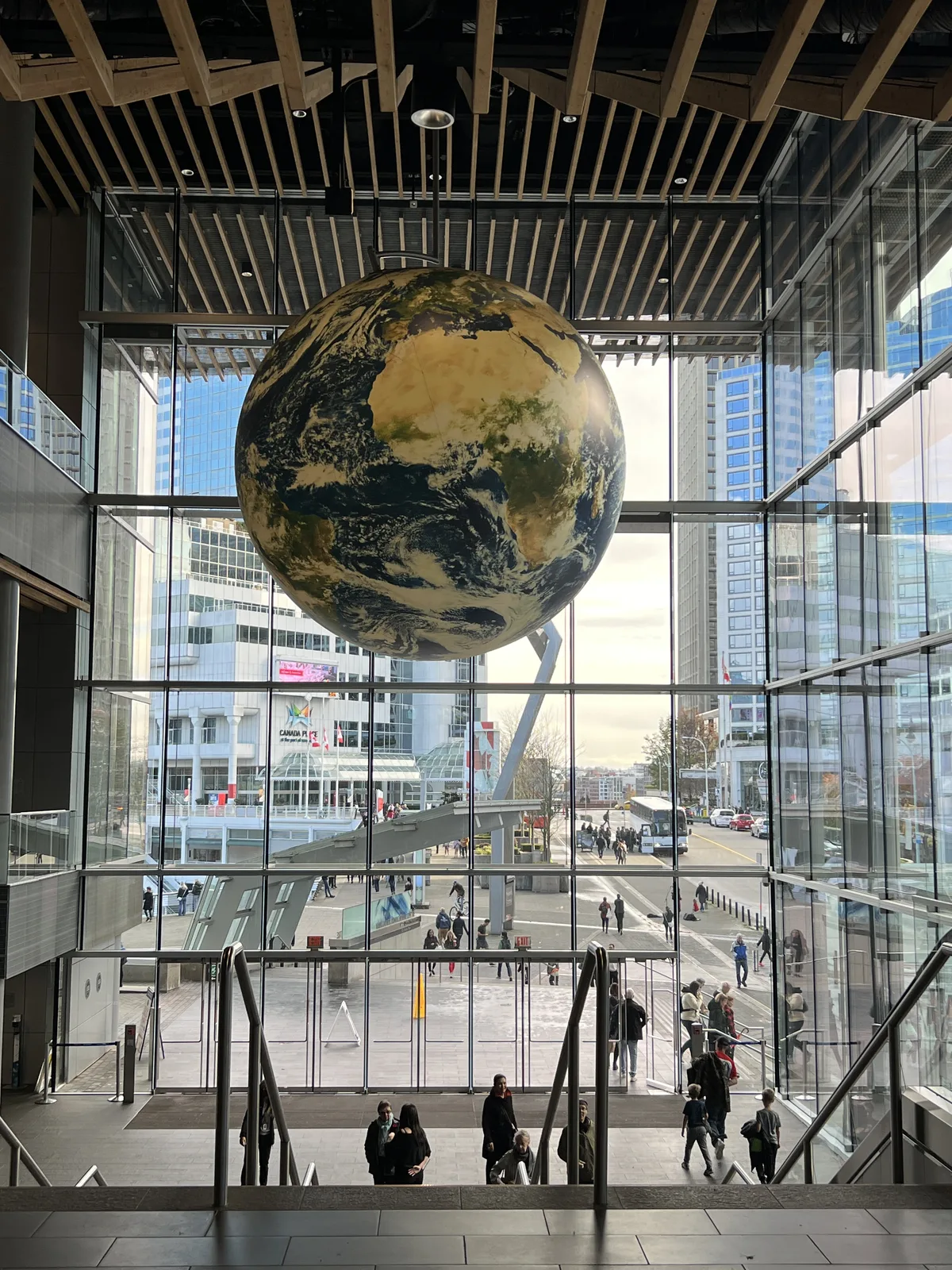
The globe hanging at the entrance of the West Building is actually a large inflatable balloon that needs to be refilled from time to time! This is actually the second balloon made, based on a NASA photo. The first time around, the image couldn't show British Columbia because it was covered in clouds (a pretty common occurrence around here...).
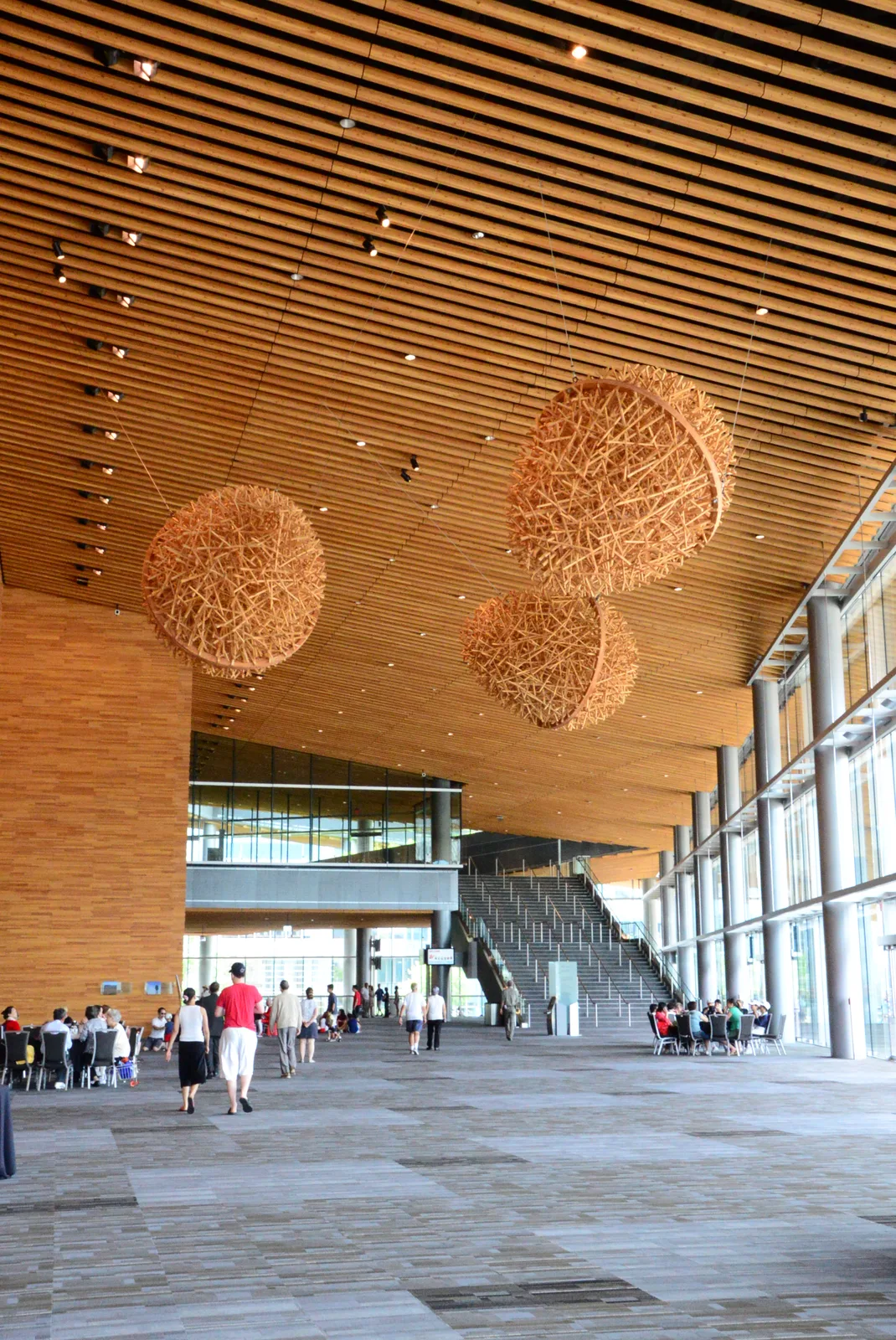
The wood beams that look structural on the ceiling are purely decorative. They're made from Douglas Fir trees (these trees grow to enormous heights, which is why the wood planks create such a striking effect).
The "float" chandeliers are the work of artist Jaakko Pernu, a Finnish environmentalist and sculptor. They were made from dead pine branches that had been infected by beetles. These branches came from forests in the interior of British Columbia (pine beetle-killed wood) in the Okanagan Valley. This wood has also been widely used for furniture and was historically transported down rivers. The floats are meant to evoke the rivers that connect the interior to the Pacific coast.
In the section of the building that sits over the water, there's a kind of "concrete shelving" that serves as habitat for various marine species.
The kitchen spans 1,000 square meters and is known for the quality and flavor of the dishes it produces. It's considered one of the best kitchens in the city, serving fresh local ingredients beautifully prepared, paired with local wines (always wonderful!).
Above the doors leading to the kitchen hangs a massive copper "curtain" with acoustic properties, designed to prevent any kitchen noise from reaching the main hall. The main hall can seat 5,000 people for dinner.
The exhibition floor, located below street level, is the size of four soccer fields and 10 meters tall. The flooring has a raindrop-like texture effect.
There's a dedicated entrance for trucks and buses, and during conferences and trade shows, there are 22 bus bays for picking up and dropping off attendees.
At international conferences, 70% of attendees come from outside Vancouver and spend an average of $500 to $700 a day in the city on accommodation, food, entertainment, and more. Conferences are an important source of income for our city.
In 2025, the city of Vancouver hosted a massive conference! 45,000 attendees came for an Alcoholics Anonymous (AA) gathering — a record-breaking number of participants!
When you travel to Canada and visit Vancouver, don't miss the chance to step inside the Convention Centre. You'll have access to most of the facilities, although some areas require an accredited escort. But even if you're on your own, go in, admire it, and take photos! It's not every day you get to visit the "Best Convention Centre in the World," is it?
Feeling inspired to come explore Vancouver? Book a tour with us and we'll take you to the Convention Centre and so much more!